
The international fertilizer market maintains a firm outlook for both nitrogen and phosphate fertilizers, driven by supply constraints in key origins, anticipated demand in high-consumption markets, and limited availability, according to the latest weekly report from Fertilizer Engineering (IF) for the end of January.
Urea: Widespread Increases

In nitrogen fertilizers, the urea market remains strong. Between January 22 and 29, the average international FOB price rose from US$431 to US$442 per ton (+3%), with upward adjustments in most major benchmarks.
The report indicates that lower exportable availability from China and Iran, along with the absence of inventory buildup, continues to support the market’s strength. The United States continues to act as a premium market, while the focus remains on a potential return of India to purchases, a factor that could further strain the global balance.
In year-over-year comparisons, IF indicates that international urea prices are 8% higher than the level recorded at the end of January 2025, confirming a market with higher prices than that observed a year ago. Furthermore, the current price is 9% above the December 2025 average (US$405/t), confirming a market recovery at the beginning of 2026.
However, prices are still 10% below the peak observed on August 14, 2025, when urea reached an international FOB average of US$493 per ton, marking a significant difference compared to last year’s highs.
MAP: Sustained Firmness and Double-Digit Year-on-Year Increase
In phosphates, the market maintains a firm tone, influenced by logistical constraints in North Africa, limited exports, and active Latin American demand. Between January 22 and 29, the average international FOB price of MAP rose from US$673 to US$690 per ton (+2%).
The report highlights that disruptions in Morocco and the continued export restrictions from China are still limiting global supply, leading buyers to prioritize forward hedging, especially for MAP.
Year-on-year, the international MAP price is 14% higher than the value recorded at the end of January 2025 and also 6% higher than the December 2025 average (US$651/t), reflecting a firmer market at the start of 2026.
However, as with urea, current prices remain 11% below the peak reached in 2025, when MAP hit a high of US$776 per ton on August 14, in a context of severely restricted global supply.
A scenario that reinforces the need for hedging.
The behavior of both markets confirms a scenario of firm prices, with tight global balances and high sensitivity to demand events. In this context, “the market continues to show potential volatility and reinforces the importance of advance input planning,” according to the IF Fertilizantes weekly report.
Source: VerdeNews Uy
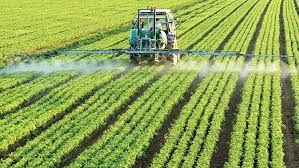
Astonishing Figures: In 2025, Brazil imported a record volume of fertilizer, nearly matching Argentina’s soybean harvest.
Argentina harvested between 48 and 49 million tons of soybeans last year. Just slightly lower, but only just, was the record volume of fertilizer imported by Brazil in 2025. The numbers are staggering.
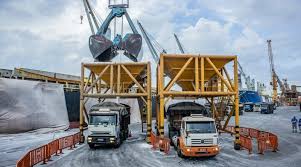
“Brazilian fertilizer imports reached 45.5 million tons last year, surpassing the 44.28 million tons recorded in 2024 and setting a new historical record,” according to the Logistics Bulletin published by the National Supply Company (Conab).
From the perspective of this public agency, “this strong performance reinforces the positive outlook for national agriculture, as it indicates a greater willingness among producers to expand the area sown with grains and increase the average productivity of their crops.” However, Brazil’s dependence on imported fertilizers is absolute.
According to official records, Mato Grosso, Paraná, and São Paulo led fertilizer consumption in the country, confirming these states’ leading role in Brazilian agricultural production.
Adding the imports through the ports of Paranaguá (PR), Santos (SP), and the Northern Arc, the total volume imported in 2025 was 45.50 million tons, compared to 44.28 million tons in 2024, representing an increase of 1.22 million tons, or 2.68%.
Paranaguá remained the main entry point for imported fertilizers into the country, handling 10.89 million tons during the period, a volume close to the 11.04 million tons of the previous year.
The ports of the Northern Arc also showed positive performance, handling 8.27 million tons in 2025, up from 7.5 million tons the previous year, highlighting the strengthening of the region’s logistics.
The Port of Santos (SP) received 8.42 million tons, compared to 8.88 million tons the previous year, representing a 5.18% decrease in input imports.
The influx of such large quantities of fertilizers allows Brazil to achieve good grain harvests, which are then exported, generating the foreign currency the economy needs.
In this regard, Conab also reported that in 2025 Brazil expanded its shipments of corn, soybeans, and soybean meal, highlighting the progress of the Ports of Paranaguá (PR) and the Northern Arc, as well as the leading role of the states of Mato Grosso, Paraná, Goiás, and Rio Grande do Sul as the origin of the cargo.
In total, exports of the three products reached 172.3 million tons last year, a 6.21% increase, representing 10.7 million tons more than in 2024, when 161.6 million tons were recorded.
Corn grain exports in December 2025 reached 40.9 million tons, compared to 39.7 million tons in the same period of the previous year.
Brazilian soybean exports, accumulated through December 2025, totaled 108.1 million tons, exceeding the 98.8 million tons recorded in the same period of the previous year.
Soybean meal exports, from January to December 2025, reached 23.3 million tons, slightly above the 23.1 million tons recorded in the same period of the previous year.
Source: Bichos de Campo

Mosaic warns of North American fertilizer demand slump in fourth quarter
Mosaic (MOS.N), opens new tab warned on Friday that an unusually steep drop in North American fertilizer demand during the fourth quarter has weighed on its sales and cash flow, sending the company’s shares down about 4% in the morning trade.
Demand fell as farmers cut fertilizer use amid tight budgets, while an early onset of winter shortened the application window for the products.
Market conditions were particularly challenging for phosphate fertilizer, which was less affordable during the quarter relative to potash, Mosaic said.
Phosphate shipments in North America were down about 20% from a year earlier, while potash demand was only modestly weaker, it said.
“This is not a good look for Mosaic, but we wonder if the worst is behind the company considering the current phosphate rebound and continued potash stability,” said BMO Capital Markets analyst Joel Jackson.
The U.S. fertilizer producer reported phosphate sales of about 1.3 million tonnes for the fourth quarter, below its previous forecast of 1.7 million to 1.9 million tonnes. Potash sales of roughly 2.2 million tonnes were also lower than its prior projection of 2.3 million to 2.6 million tonnes.
In Brazil, Mosaic said tighter credit conditions and increased competition, including imports of lower-analysis phosphate from China, weighed on demand and margins, leaving fourth-quarter volumes at its Mosaic Fertilizantes unit well below plans.
Sales volumes were roughly 9 million tonnes for the full-year 2025, flat year-on-year but reflected a broader downturn, the company said.
Mosaic is set to report its fourth-quarter results on February 24.
Source: Reuters
Maaden sells 40 000 t of DAP fertilizer to Europe
Saudi Arabian phosphates producer Maaden has sold 40 000 t of DAP to a trader at US$665 – 670/t fob Ras Al-Khair for loading in February and later shipment to Europe.

The price nets forward to the US$700s/t up to the US$720s/t cfr duty unpaid, depending on the location and number of unloading ports.
Argus Media has reported that the cargo will unload across multiple ports in western Europe, but the exact locations are unknown.
Europe is not a typical destination for Saudi Arabian DAP, discouraged by import duties of 6.5% and higher freight costs compared with many of its more usual destinations.
Maaden and fellow Saudi Arabian producer SABIC have also reported selling a combined 75 000 t of DAP at US$695 – 700/t fob for shipment to Latin America in late February through to early March in separate sales.
Source: World Fertilizer
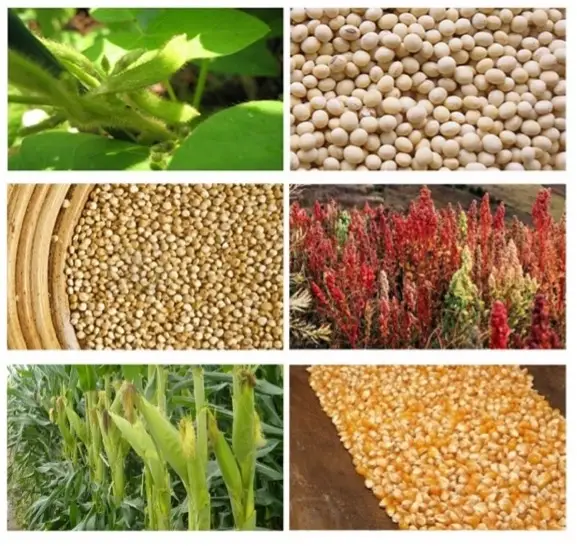
ARGENTINA’S MAIN CROP OVERVIEW
SOYBEANS
Soybean planting is nearing completion, having reached 99.5% of the intended area. Planting remains to be done in the northern part of the agricultural region. 83.8% of the crop is in Good/Normal condition, with 64% of the area experiencing Adequate/Optimal soil moisture. 30% of the early-planted soybeans are already in their critical period, primarily in both the central and southern growing regions.
CORN
Planting is in its final stages, with 97.2% of the projected area sown, leaving only the northern part of the agricultural region to be completed. 85.2% of the planted area is in Good/Normal condition, while 49% has Adequate/Optimal soil moisture.
SUNFLOWER
The harvest covers 24.2% of the suitable area, with an average yield of 22.8 quintals per hectare. Although the central and northern agricultural regions are achieving yields above average, the decline in crop conditions in the south is keeping the projection at 5.8 million tons.
SORGHUM
After a two-weekly increase of 3.5 percentage points, 86.8% of the projected area has been planted, reflecting a year-on-year delay of 8.1 percentage points due to rains in the northern agricultural region that are slowing down planting.