
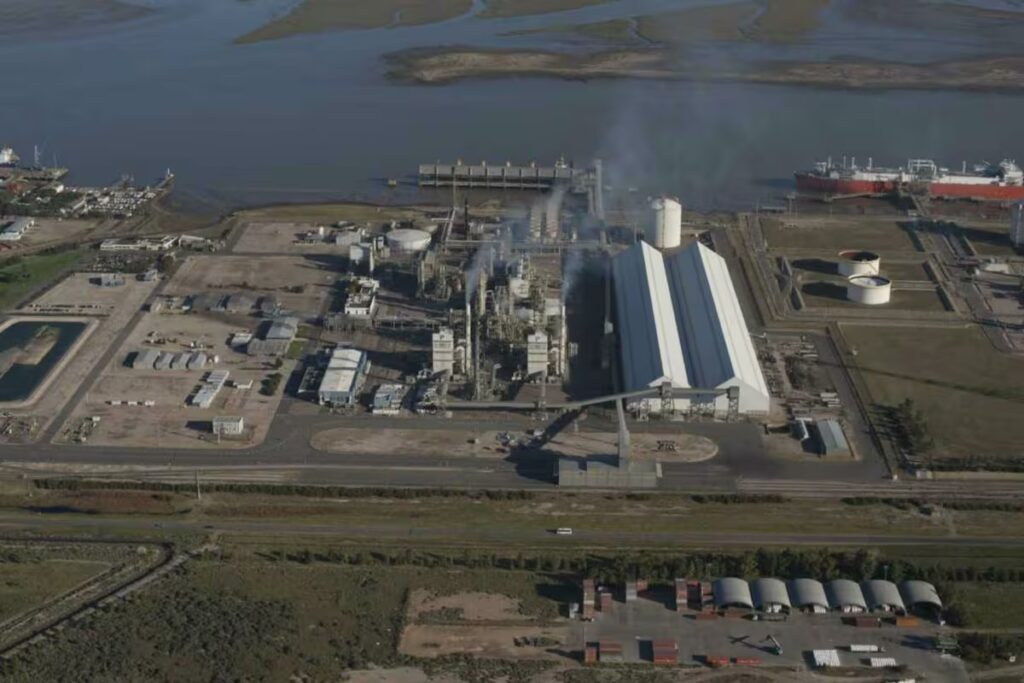
The state-owned oil company approved the sale of its 50% stake in Profertil, completing a US$1.2 billion transaction that leaves Adecoagro with 90% and ACA with 10% of the country’s largest fertilizer producer.
In one of the most significant business moves in Argentine agribusiness in recent years, YPF confirmed the sale of its stake in Profertil, ending a partnership it had maintained for decades in the country’s largest fertilizer plant. With this decision, the state-owned oil company formally withdraws from the agribusiness sector to focus on its core energy business and the expansion of Vaca Muerta, a strategic objective the company reaffirms in every official statement.
The deal was finalized when YPF’s Board of Directors approved the binding offer submitted by Adecoagro, which will acquire the 50% stake the state-owned company held in Profertil. Last week, Nutrien, the other long-standing partner, had already sold its half: 80% remained in the hands of Adecoagro and 20% in the hands of the Argentine Cooperatives Association (ACA). With both transactions completed, Profertil is now 90% controlled by Adecoagro and 10% by ACA, consolidating a complete change of ownership in the company.
The magnitude of the transaction is significant: US$1.2 billion for the entire company, a valuation that reflects both Profertil’s strategic importance and its critical role within the Argentine agricultural supply chain. The Bahía Blanca plant produces approximately 1.3 million tons of urea and 790,000 tons of ammonia annually, making it an essential input for the local production system in a market where availability, energy prices, and logistics have a direct impact on agricultural competitiveness.
In the official statement, YPF emphasized that the sale is part of a process of “focusing on strategic businesses,” which implies not only the exit of Profertil but also the decision to divest YPF Agro, one of the most emblematic units within the company’s historical relationship with the agricultural sector. The oil company stressed that this restructuring aims to “generate value for its shareholders and strengthen the country’s energy development,” aligning its portfolio with the production of fuels, shale oil, and bioenergy projects.
On the buyer’s side, Adecoagro has undergone a year of significant transformations. The company, which operates over 200,000 hectares in Argentina, Brazil, and Uruguay and combines agriculture, energy, and dairy production, underwent a corporate shake-up in 2025: 70% of its capital was acquired by Tether, the global cryptocurrency giant. With this move, a technology company indirectly becomes the main owner of the country’s largest fertilizer factory, a fact that has not gone unnoticed in a sector accustomed to working with traditional agricultural players.
For its part, ACA reinforces its position as one of the most relevant players in the agribusiness chain. With more than 100 associated cooperatives and a key role in the marketing of grains and inputs, its stake in Profertil gives it a strategic position within the fertilizer market, one of the most sensitive segments for Argentine agricultural competitiveness.
The closing of this transaction marks the end of one stage and the beginning of another for an industry undergoing a process of global reconfiguration. While YPF focuses on energy, Adecoagro and ACA are committed to strengthening local fertilizer production, a vital input for maintaining productivity levels in a country increasingly dependent on agronomic efficiency and industrial supply.
Source: Agrolatam.com
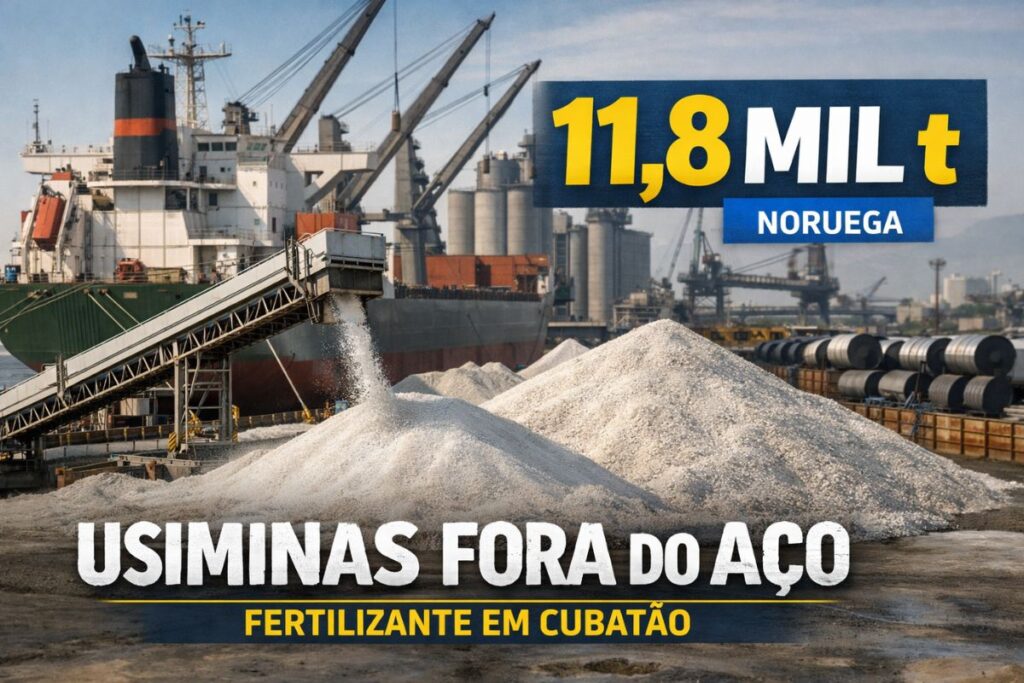
Usiminas terminal in Cubatão begins unloading fertilizers.
The first transaction with Yara marks the diversification of logistics services at the private port.
The first fertilizer unloading operation in Usiminas’ history was carried out at its Private Maritime Terminal, located in Cubatão (SP), marking a new step in its strategy of diversifying revenue through logistics. The operation, carried out in November in partnership with the company Yara, moved 11,8 tons of YaraBela® fertilizer, originating from Sluiskil, Norway, destined for the Cubatão Industrial Complex and the blending unit in Alfenas (MG).
This initiative is part of Usiminas’ plan to expand the logistics service profile of the terminal, which until now has been mainly focused on the mining and metallurgical chain. In addition to diversifying cargo flow, the operation reinforces the terminal’s position as a strategic alternative for companies located in the Cubatão Industrial Complex, offering access to a port route integrated with rail and road networks, less subject to the restrictions and queues of traditional ports in the region.
“Yara is constantly seeking competitive solutions to meet its logistical needs. We were pioneers, for example, in carrying out the first bulk fertilizer cabotage operation in Brazil, in the use of LNG-powered trucks for transporting inputs, and in OEA certification in the sector. This port project in Cubatão is yet another initiative that highlights our strategy of enabling alternatives for maximum efficiency in our operation,” says Diego Garcia, Logistics Manager at Yara Brazil.
According to Vinicius Benincasa, Senior Manager of Port Logistics at Usiminas, the terminal offers significant logistical advantages. “The Cubatão Private Maritime Terminal is a strategic asset for the company. Its ability to operate with predictability and multimodal integration provides greater efficiency in the flow of goods, strengthening the competitiveness of companies in the region,” he states.
In addition to its strategic importance, the operation also highlights the terminal’s capacity to receive different types of cargo, aligned with studies for new logistical opportunities and greater integration with neighboring companies.
Cubatão Private Maritime Terminal
Located approximately 70 km from the São Paulo metropolitan area, the Cubatão Private Maritime Terminal has easy access via the Anchieta-Imigrantes highway system. The terminal features rail integration with the MRS, FCA, and ALL networks, enabling continuous and efficient multimodal operations.
Source: Cultivar Magazine

Lithuanian port signals readiness to resume Belarus fertilizer handling
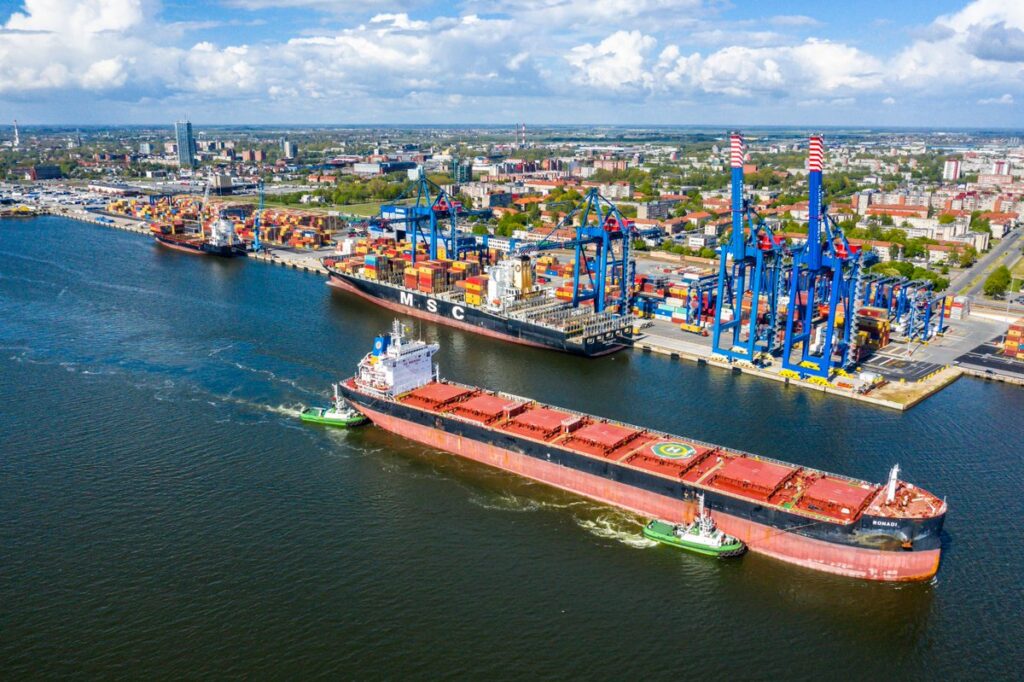
The port of Klaipeda has declared its technical readiness to resume handling fertilizer shipments from Belarus, pending a political decision, according to its chief executive.
Algis Latakas, the port’s general director, said Klaipeda is prepared to work with any type of cargo permitted under prevailing regulations, as competition for transit volumes intensifies among regional ports. He said the infrastructure needed to handle Belarusian fertilizers remains in place.
Sanctions imposed on Belarusian fertilizers have significantly reduced cargo flows through Klaipeda, once a key export route for products from state-owned producer Belaruskali. Before the restrictions were introduced, the port handled about 48 million tons of cargo annually, with fertilizers accounting for roughly a quarter of total throughput.
By 2023, total cargo volumes had declined to around 32 million tons, reflecting the loss of transit business related to Belarus. Latakas said the impact of the sanctions extended beyond port operators, affecting shipping companies and railways that relied on the fertilizer trade.
Klaipeda has been seeking to diversify its cargo base in recent years. Still, port officials have repeatedly pointed to the sharp decline in volumes following the halt of Belarusian fertilizer shipments as a significant challenge for revenues and utilization rates.
Source: Fertilizers Daily
Operations at Fafen nitrogen fertilizer plant in Brazil resume
Brazilian, state-run company Petrobras has resumed operations at Fabrica de Fertilizantes Nitrogenados (Fafen), a nitrogen fertilizer plant located in Laranjeiras city in northeastern Sergipe state, Brazil, ending a 21-month halt in production.
The announcement was made by Petrobras’s president Magda Chambriard on social media and confirmed by Sergipe government.
Fafen Sergipe restarted ammonia production on 31 December, marking the resumption of operations. The unit can produce up to 650 000 tpy of urea, 450 000 tpy of ammonia, and 320 000 tpy of ammonium sulfate.
Operations in Fafen Sergipe had been idled since March 2024, when it was managed by the Brazilian chemical company Unigel, which also managed Fafen operations in Camacari in northeastern Bahia state. Unigel, facing financial difficulties, has twice filed for bankruptcy protection.
Because of this and in line with Petrobras’s strategic plan to invest in the fertilizer sector, the company began the process of regaining control of Fafens in April 2025. Petrobras in September signed a contract with Brazilian industrial maintenance and management company Engeman to restart operations at Fafens.
Source: World Fertilizer,

ARGENTINE MAIN CROPS OVERVIEW:
SOYBEANS
Planting is 88.3% complete nationwide. 85% of the planted area has optimal/adequate soil moisture. 40% of the early-planted soybeans have entered reproductive stages.
CORN
Corn planting is 89.1% complete. 68.8% of the early-planted corn is still in its critical period. The lack of rainfall in areas of western agriculture is beginning to affect soil moisture.
SUNFLOWER
After a week-on-week increase of 4.3 percentage points, the sunflower harvest has reached 11.1% of the suitable area nationwide. The average yield is 22.7 quintals per hectare, above the average values for this time of year.
WHEAT
After a week-on-week increase of 5.8 percentage points… The harvest covers 98.5% of the suitable area. The national average yield is 43.4 quintals per hectare, given the higher-than-expected yields in southeastern Buenos Aires province.
BARLEY
The harvest concludes with a national average yield of 46.6 quintals per hectare, 14% higher than the average of the last five seasons. Production totals 5.4 million tons, 100,000 tons higher than our previous estimate.
Source: Buenos Aires Grain Exchange