
Fertilizers in San Nicolás accounted for 236,000 of the 438,000 metric tons handled by the ports of Buenos Aires Province during the first quarter of 2026. Additionally, the terminal received 91 vessels during this period, representing a 24.7% increase compared to the previous year. This surge outpaced the growth rate of the operated tonnage.
More Vessels Than Cargo: What the Disparity Indicates
The contrast between both variables is the defining metric for San Nicolás at the start of the year. While the tonnage of received fertilizers grew at a moderate pace, the number of docked vessels accelerated sharply. This disparity typically points to two non-mutually exclusive phenomena:
Greater Discharge Fragmentation: Smaller vessels operating with higher frequency.
Diversification of Origins and Product Types: A broader range of fertilizer types and origins, multiplying the required arrivals to meet the same volume.
This pattern is not new for the terminal. In 2025, San Nicolás recorded 521 vessels operated—a 42.3% increase over 2024. That same year, total tonnage grew by 14% to nearly 3 million metric tons. The ratio of vessels to cargo consistently shows a clear trend quarter after quarter: port activity growth relies as much on arrival frequency as it does on transported volume.
Fertilizers in San Nicolás: Consolidated Leadership Since 2025
First-quarter performance confirms a dominant position that San Nicolás already held convincingly. Throughout 2025, the terminal accounted for 69.75% of all fertilizers handled across the ports of Buenos Aires Province. That volume represented over 2.35 million metric tons out of a provincial total of 3.38 million.
This market share cemented San Nicolás as the country’s primary reception and storage hub for fertilizers. Cecilia Comerio, President of the Port Management Consortium, attributes this leadership to a strategic private-sector investment decision made in the 1990s, when national port administration was transferred to the provinces.
This commitment materialized into concrete infrastructure. Today, the port boasts a static storage capacity of 870,000 metric tons for dry fertilizers—half of the national capacity in this segment. From there, goods are redistributed via multiple routes: barge shipments to Paraguay, Southern Brazil, and Bolivia, alongside rail transport to inland provinces such as Mendoza and Tucumán.
A Specialized Role Within the Broader Port System
Despite its dominance in fertilizers, San Nicolás maintains a moderate share within the overall provincial port system regarding total bulk cargo. In the first quarter of 2026, the terminal contributed 2.83% of total loadings and discharges across the provincial system.
This share aligns closely with 2025, when its participation hovered around 5% of the provincial total. The difference stems from the port’s specific profile: unlike major grain and hydrocarbon export terminals, San Nicolás is almost exclusively tailored toward the import of agricultural and industrial inputs.
Outlook for the First Half of the Year
Initial data for the complete first half of the year confirms that this dynamic remained consistent with slight variations. Between January and June 2026, San Nicolás moved 1,243,522 total metric tons, marking a 2% year-on-year growth. Dry fertilizers accounted for 72% of that total.
This figure indicates that tonnage growth moderated compared to the 2025 spike. Nevertheless, fertilizers in San Nicolás remain the core pillar of port operations. The higher vessel frequency recorded in the first quarter appears to be a structural feature of the period rather than an isolated anomaly.
Source: GlobalPorts | Ports & Logistics
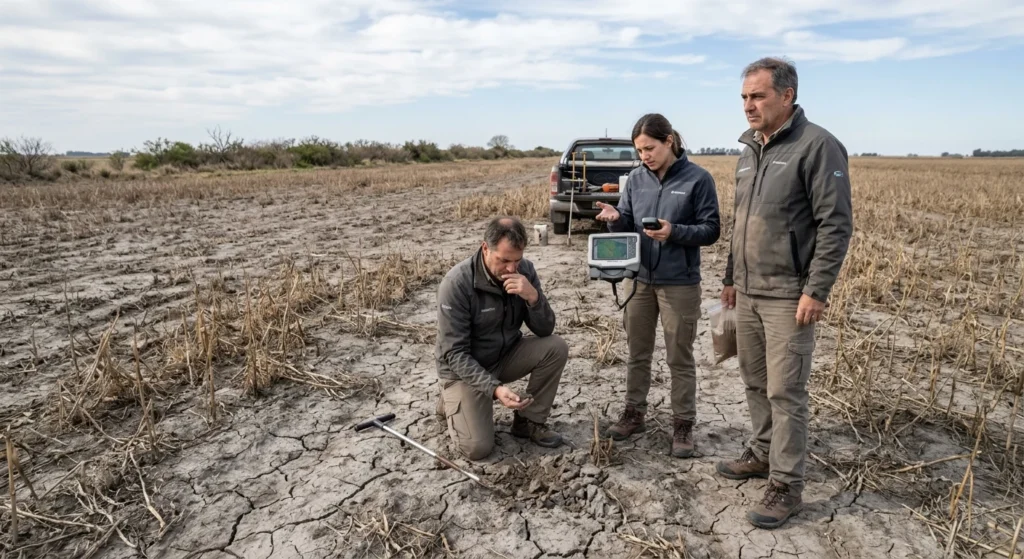
ARGENTINA: Phosphorus Is Being Depleted and Soils Are Paying the Price: The Silent Challenge Worrying Experts
Argentina ranks among the countries with the lowest phosphorus replenishment rates in the world, and the impact is already taking its toll on soil health. At the Aapresid Congress, international experts explained why this trend threatens agricultural productivity and outlined strategies to reverse it.
Decades of phosphorus extraction exceeding its replenishment have raised alarm bells among specialists gathered at the 34th edition of the Aapresid Congress. Although phosphorus is an essential nutrient for crop development, its loss often goes unnoticed until it begins to impair soil quality and yield potential.
This critical issue was the focus of the panel “We are consuming the phosphorus of Argentine soils: Where are we headed and how do we fix it?”, featuring Brazilian expert Leonardus Vergütz, Chief Scientific Officer at OCP Nutricrops, and moderated by renowned fertility specialist Fernando García.
The diagnosis was unequivocal. According to García, over the past 30 years, Argentine agriculture has extracted approximately 4.5 million metric tons more phosphorus than it has replaced. Although replenishment rates have reached around 60% in recent years, the overall balance remains strictly negative.
For Vergütz, this places Argentina among the nations with the lowest phosphorus replacement rates globally—a condition whose consequences extend far beyond immediate crop yields.
“Argentina possesses naturally fertile soils, but for decades it extracted more phosphorus than it returned. This undermines agricultural sustainability, reduces productivity, and limits soil carbon sequestration capacity,” Vergütz explained.
The specialist warned that losing this nutrient accelerates the decline of organic matter and degrades soil physical structure—two factors vital for agricultural systems to withstand droughts, excess moisture, and other climate-related stressors.
Against this backdrop, he delivered one of the panel’s most impactful statements: “We have exhausted the resilience of Argentine agriculture.”
However, the situation is not irreversible. Vergütz emphasized that recovering lost natural capital remains achievable through a sustained nutrient replenishment strategy combined with sound agronomic management.
Among the available tools, he highlighted the “4Rs” of nutrient stewardship: using the Right source, at the Right rate, at the Right time, and in the Right place.
This approach not only optimizes fertilizer use efficiency but also drives higher yields, strengthens crops, reduces nutrient losses, and enhances overall farm profitability.
Source: TodoAgro
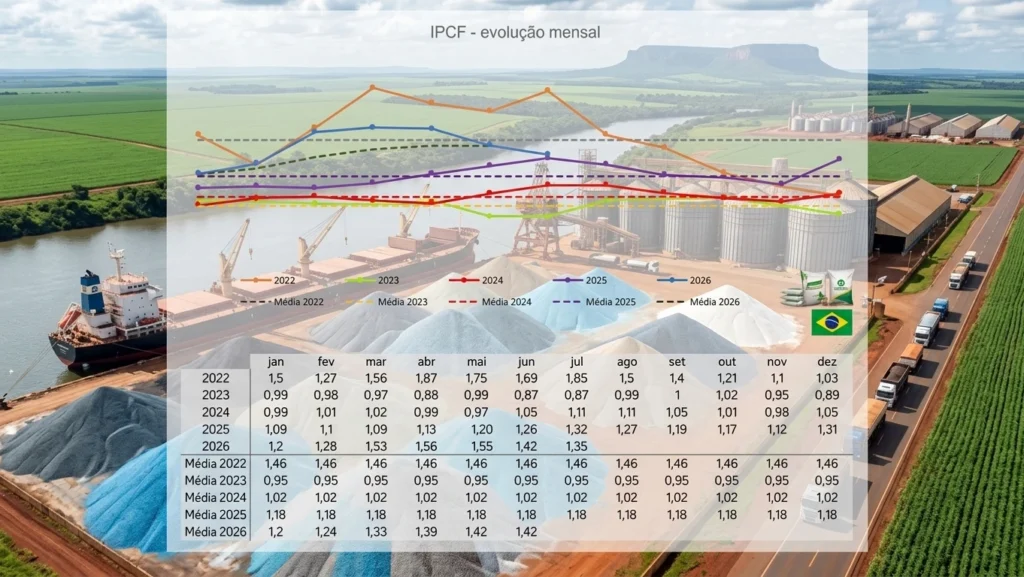
BRAZIL: Fertilizer Purchasing Power Index falls 5% in July
The Fertilizer Purchasing Power Index (IPCF) ended July at 1,35, a 5% decrease compared to June 2026. The result was mainly influenced by the combination of rising agricultural commodity prices and lower fertilizer and raw material prices, factors that had the greatest impact on the indicator. In the exchange rate market, another component of the index, the scenario was one of stability. The dollar ended the month practically unchanged, with a slight decline of 0,2% compared to the previous period, which limited its impact on the IPCF.
In agricultural commodities, there was an average increase of around 4%. Soybeans were the main highlight, with an advance of approximately 7%, driven by geopolitical tensions between the United States and Iran, which increased volatility in the oil market. Concerns about weather conditions in the United States and recent data from the United States Department of Agriculture (USDA), which increased uncertainties regarding the American harvest, also contributed to this movement. Corn saw a more moderate increase of around 0,5%, given the good results of the Brazilian second crop, which has already reached approximately 80% of the harvested area. Cotton advanced about 2%, while sugarcane remained stable.
Regarding fertilizers, prices fell by an average of about 8% during the month. The decline was mainly driven by a 30% reduction in urea prices and a 9% drop in the price of single superphosphate. On the other hand, prices for MAP (monoammonium phosphate) and MOP (potassium chloride) remained stable.
Another important point to consider is the impact of reduced phosphate fertilization – which cannot be generalized, as it depends directly on soil fertility and the management history of each area. Producers who have invested in building fertility in recent years are more protected in the short term, since they have a reserve of phosphorus in the soil. Even so, technical studies analyzed by Mosaic indicate that, in scenarios without phosphorus application, productivity losses can vary from approximately 6% to 20%, with a higher risk in areas with low availability of the nutrient. This scenario refers to normal weather conditions – in adverse situations this impact can be amplified.
Therefore, the recommendation is that any adjustments to fertilization should be made based on soil analysis and technical guidance, ensuring future phosphorus replenishment and avoiding greater impacts on subsequent harvests.
For the coming months, several factors remain on the radar and may influence the index’s behavior. These include the evolution of the conflict in the Middle East, especially given the region’s and the Strait of Hormuz’s importance to the global trade of agricultural inputs, and weather conditions, with El Niño gaining strength and potentially affecting the planting calendar for soybeans and other important crops. These elements will continue to be crucial for the price dynamics of commodities, fertilizers, and consequently, the IPCF.
Source: Cultivar Magazine

Bangladesh tenders 950,000 tonnes of DAP, TSP and MOP for FY 2026-27
Bangladesh’s Ministry of Agriculture issued a private-sector tender on August 3 to import 950,000 tonnes of fertilizer for the July 2026 to June 2027 financial year, covering 500,000 tonnes of DAP, 200,000 tonnes of TSP and 250,000 tonnes of standard MOP. The tender closes August 18.
Private importers can bid for a maximum of 40,000 tonnes of DAP, 30,000 tonnes of TSP and 30,000 tonnes of MOP per company. All offers must be submitted on a CFR basis and include delivery costs to designated warehouses at Chittagong, Narawangang, Nogorbari and Nowapara.
Winners must establish a letter of credit and post a performance bond within seven days of the award, with cargo shipment required within 45 days.
The total procurement volume matches last year’s tender, issued on July 24, 2025. Bangladesh typically launches its private fertilizer procurement before the start of the new fiscal year but has faced repeated delays in recent years due to domestic fiscal pressures.
The tender arrives as global phosphate prices remain elevated due to sulfur supply constraints and restricted Chinese exports. Bangladesh has been diversifying its supply sources, including a potash supply deal with Russia signed in June.
Source: Argus Media

India issues 1.7 million tonne urea tender through RCF with bids opening on August 11
India launched a new international urea tender on July 29 through state-owned Rashtriya Chemicals and Fertilizers (RCF), seeking 1.7 million tonnes of bulk urea for delivery ahead of the rabi planting season. Technical and commercial bids are set to open on August 11, with suppliers required to keep offers valid until August 24.
The tender splits procurement between 1 million tonnes for India’s west coast and 700,000 tonnes for the east coast. Successful exporters must complete all shipments by September 24. The volume matches India’s previous tender issued by National Fertilizers (NFL) in May, though RCF’s round shifts a larger share toward western ports.
RCF has tightened commercial requirements compared with the earlier round. Suppliers may submit offers under either FOB or CFR terms, but Categories II and III producers must now provide both pricing formats simultaneously or face automatic disqualification.
The tender also introduces strict geopolitical screening. RCF will reject any suppliers, vessels or logistics chains subject to U.S., EU or U.K. sanctions. Cargoes cannot originate from or transit through Ukraine, the Sea of Azov, Russian Black Sea ports or Russian territory within 200 km of the Ukrainian border. Suppliers from countries sharing a land border with India must provide official registration credentials.
Market participants view the August 11 results as one of the most important pricing events for global urea in Q3 2026. India’s previous NFL tender in June drew bids near $449 per tonne CFR, roughly half the peak of nearly $1,000 seen during the April round, reflecting the easing of Hormuz-related supply constraints.
The tender comes as global urea prices have firmed again in July following renewed Middle East tensions and seasonal demand from Northern Hemisphere buyers.
Source: Agrolatam

ARGENTINA MAIN CROPS OVERVIEW:
SUNFLOWER
To date, sunflower planting shows a progress of only 1.7 percentage points, covering 11.5% of the 3 million hectares (MHa) projected for the 2026/27 cycle, reflecting a 4.6 percentage point (p.p.) lead compared to the last five campaigns. Although field operations are slowing down in northern parts of the country due to sectors lacking firm ground, the first lots planted with the oilseed are beginning to be surveyed in the center of the agricultural area, specifically in northern Córdoba, North-Central Santa Fe, and to a lesser extent, in East-Central Entre Ríos. In the southern regions of the agricultural area, high ambient humidity conditions continue to predominate, and although there are still 2 months left before the planting window opens, spring rain forecasts are generating uncertainty regarding operational planning.
WHEAT
Similarly, wheat planting shows an interweek progress of only 0.6 p.p. due to difficulties advancing over the southern agricultural area, which continues under inadequate soil-firmness conditions. To date, planting progress has reached 99.6% of the 6.5 MHa projected, and the remainder could extend for a few more weeks. Regarding phenology, 53.5% is transitioning from tillering onward, under adequate/optimal moisture conditions in 86.5% of the area. The most advanced lots, concentrated in the north of the country, are initiating heading under a crop condition ranging from good to excellent in more than 80% of the lots, which raises regional production expectations ahead of the onset of yield-determination stages.
CORN
Meanwhile, the harvest of corn intended for commercial grain reached 77% of the eligible area nationwide, with an average yield of 78.6 quintals per hectare (qq/Ha). The persistence of high ambient humidity continues to delay grain drying and condition the progress of operations in various sectors. The greatest delays compared to the average of the last five campaigns are concentrated in the southern agricultural area and North-Central Córdoba, where progress is between 14 and 26 p.p. below said average. Additionally, strong winds were recorded in Córdoba province over the last few days, causing localized lodging of late-corn lots. On the other hand, the yields obtained as harvesting progresses across a large part of the agricultural area continue in line with campaign expectations, allowing a national production projection of 64 million metric tons (MTn) to be sustained.
SORGHUM
Finally, the grain sorghum harvest is close to completion, reaching 97.9% of the eligible area nationwide, with an average yield of 40.8 qq/Ha. Operations have already concluded in most of the agricultural area, while the main remnants are concentrated in central and southern Buenos Aires and southern La Pampa. With the harvest nearing completion and the yields surveyed so far, a national production projection of 2.8 MTn is maintained.