
This week, the Argentine fertilizer market “woke up” in response to the incipient rise in urea prices, a process that anticipates a new upward trend in a highly uncertain international context.
“Demand split again, but with a different motivation. On one hand, farmers rushed to hedge their wheat crops and bring forward the volumes destined for topdressing, accompanied by the rebound in wheat prices,” notes the weekly report from the consulting firm IF Ingeniería en Fertilizantes.
“On the other hand, there was a surge in advance purchases for corn, which had been occurring tentatively due to favorable price ratios and accelerated this week. Distributors joined in, taking positions as the price increase consolidated, signaling that the bottom has been reached,” it adds.
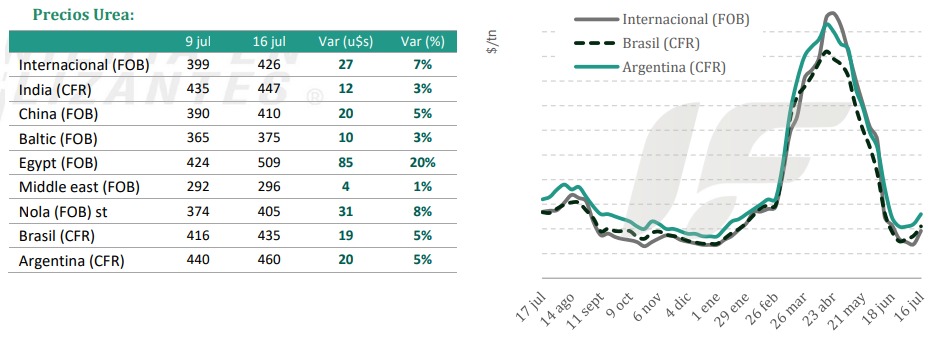
Argentine urea imports were reported in the range of US$460-470/ton CFR, and wholesale prices rose to between US$550 and US$570/ton.
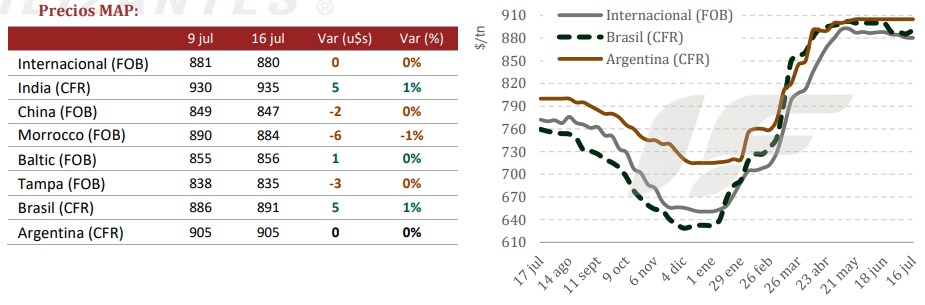
“Regarding phosphorus, nothing changed: import activity remains commercially paralyzed. Inquiries have increased slightly, but there is no firm interest in committing volumes; with the domestic market below replacement costs, importing remains unfeasible, and the bulk of seasonal purchases for wheat are already covered,” the report states.
Some suppliers with lower inventories adjusted their prices upward, offering monoammonium and diammonium phosphate (MAP and DAP) in the wholesale market at between US$960 and US$1010/ton.
As for the global nitrogen fertilizer market, prices rebounded sharply amid escalating hostilities in the Middle East and the Black Sea.
“Producers in Egypt and Algeria capitalized on the urgency of European buyers and the lack of reliable alternatives. They quickly sold some 140,000 tons, catapulting their FOB prices to levels well above US$500/ton. It was the region with the most aggressive price jump,” he notes.
The regional supply was shaken after recent Russian attacks on Ukrainian port infrastructure in the Black Sea paralyzed shipping traffic. This disruption injected a high level of uncertainty into the region, reducing immediate availability and providing strong indirect support for prices.
The market continues to grapple with the volatility in maritime traffic through the Strait of Hormuz. “To remain competitive in the face of logistical barriers, Iranian suppliers continue to ship volumes at steep discounts, closing sales around US$340 to US$350/ton FOB for destinations in Turkey and Africa,” he points out.
In Brazil, the pace of demand accelerated. Faced with global logistical uncertainty and rising prices, buyers in that country were forced to accept higher prices to secure their coverage, closing the bulk of deals between US$430 and US$440/ton CFR (with Chinese offers at US$420 and Russian offers at US$430-435/ton).
Meanwhile, the global market for phosphate fertilizers remains deeply stagnant, where weak global demand, crippled by extremely low affordability, is being offset by soaring production costs that prevent prices from falling.
“Contrary to the hopes of previous weeks, the raw materials crisis has worsened due to renewed tensions in the Middle East, which has once again threatened the sulfur supply,” the report highlights.
Sulfur shortages and high prices continue to impact phosphate production. In this context, Mosaic in the US extended its production cuts beyond those already implemented, while Chinese exports of DAP and MAP remain paralyzed.
The Brazilian MAP market remains extremely weak due to excess storage at ports and farmer caution. Purchases for the upcoming soybean season are significantly delayed, and importers are reluctant to commit to new transactions. Despite weak demand, prices remain stable.
“In the US, overall phosphate demand is expected to fall by 15% for the fall application season compared to the previous year. DAP was valued at a reference price of US$781-785/ton FOB and MAP at US$780-790/ton,” the report summarizes.
Source: Soybean Value

Brazil: Fertilizer Purchasing Power Index closes June down.
IPCF fell 7,5% due to a reduction in agricultural commodity and fertilizer prices.
The Fertilizer Purchasing Power Index (IPCF) ended the month at 1,42, a result 7,5% lower than that recorded in May 2026. The drop mainly reflects the combination of a decline in agricultural commodity prices and a reduction in the average cost of the main fertilizers used in the country.
Despite the decline in commodity and input prices, the exchange rate acted as a partial offsetting factor. The dollar rose 3% during the period, which helped to contain a sharper reduction in the IPCF (Consumer Price Index).
In the commodities market, there was an average drop of approximately 3% during the period. This movement was observed in relevant crops such as soybeans, with a decline of 1,1%; corn, with a drop of 5,2%; cotton, with a decrease of 3,2%; and sugarcane, with a decrease of 4%. This behavior is related to the increase in supply in the market and the entry of volumes from the Brazilian harvest, in addition to the beginning of the second corn crop harvest, which intensified the pressure on prices.
Regarding fertilizers, prices fell by an average of about 8% during the month. The decline was mainly driven by a 30% reduction in urea prices and a 9% drop in the price of single superphosphate. On the other hand, prices for MAP (monoammonium phosphate) and MOP (potassium chloride) remained stable.
In the domestic market, with the approach of the summer crop planting season, there is increased attention being paid to acquiring the remaining fertilizers for soybean planting, especially phosphorus. The international scenario remains unstable. The weaker oil prices have contributed to an environment of less pressure on commodity prices.
Source: Cultivar Magazine
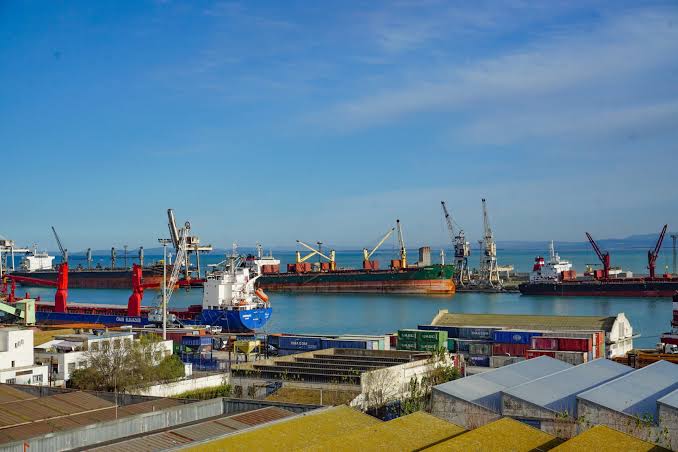
Algeria accelerates Annaba port expansion to support phosphate exports
Algeria plans to double the workforce and deploy additional machinery at the Annaba phosphate port expansion as the government seeks to complete the project in the first quarter of 2027. The country’s works and infrastructure ministry said the additional workers and equipment would be mobilized during July and August.
The Mediterranean port will serve as the principal export outlet for Algeria’s expanding phosphate industry. The IPP Souk Ahras phosphoric acid plant is designed to produce 900,000 metric tons per year of P2O5 and could require about 3 million metric tons of phosphate rock annually, according to Argus Media analysts. The Bled El Hadba mine, which will supply the complex, has begun operations and is accumulating inventories.
Separately, phosphate producer Somiphos plans to complete a 1 million metric ton annual expansion at the Djebel Onk mine by mid-2027, increasing capacity from about 1.5 million metric tons. The additional production could support exports to Indonesia under an agreement with Pupuk Indonesia for up to 1 million metric tons per year. The new Algerian supply could provide European and Asian buyers with an alternative to Middle Eastern material, although it will not ease current market tightness, driven partly by disrupted Gulf trade routes and elevated sulfur costs.
Source: Argus Media

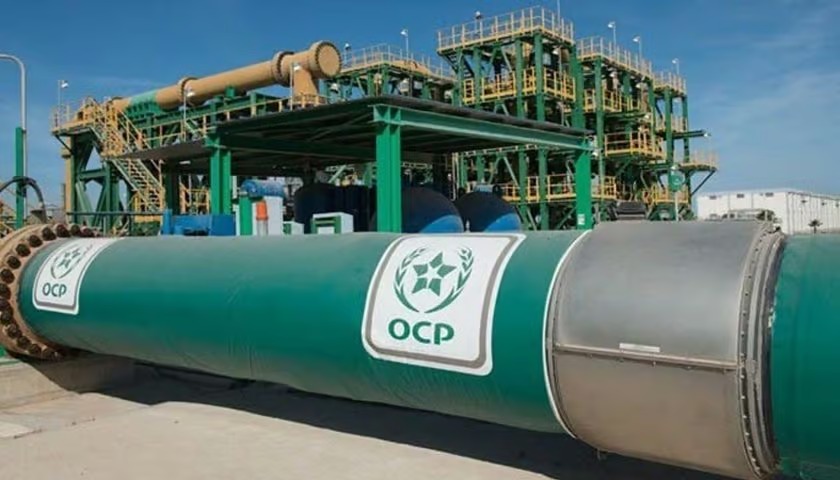
OCP prepares to resume phosphate fertilizer shipments to US after tariff suspension
USDA says the first cargoes from Morocco could arrive in New Orleans within days following the temporary removal of import duties.
OCP Group could resume phosphate fertilizer shipments to the United States within days after the US government suspended import duties on Moroccan phosphate for eight months.
US Department of Agriculture Deputy Secretary Stephen Vaden said ships could head to New Orleans “as early as the end of this week or next week” after OCP North America’s chief executive met USDA officials to complete the remaining import requirements.
The final step involves customs paperwork to classify the shipments under President Donald Trump’s June 29 order, which temporarily suspended antidumping and countervailing duties on Moroccan phosphate fertilizer.
The US administration used Section 318 of the Tariff Act of 1930 to suspend the duties after declaring an emergency over fertilizer supply concerns. The measure aims to improve fertilizer availability for US farmers after months of supply disruptions linked to the near closure of the Strait of Hormuz, lower domestic phosphate production and tight global supplies.
Phosphate fertilizer prices have yet to respond to the policy change. According to DTN fertilizer data, monoammonium phosphate averaged US$954 per ton, while diammonium phosphate averaged US$912 per ton. Vaden said, “Those price effects should begin to filter through when the ships hit New Orleans.”
USDA estimates the temporary suspension could lower phosphate fertilizer costs by as much as 22%, saving about US$1.82 billion annually (approximately US$1.82 billion) for nearly 100,000 farmers across 97 million planted acres.
The suspension has no volume limit, allowing OCP to supply any quantity during the eight month period. Vaden said, “That means that if retailers want to place large orders with OCP … they absolutely can do that.” He added that retailers could secure lower priced supplies for the current season and future demand.
OCP, based in Casablanca, remains the world’s largest producer of phosphate rock and phosphate based fertilizers. Morocco holds more than 70% of the world’s known phosphate reserves, while OCP accounts for about 31% of the global phosphate market.
The latest move follows several years of trade disputes. The United States first imposed a 19.97% countervailing duty on OCP in 2021 before reviews reduced the rate to 2.11% in late 2025. The US government later dropped its appeal.
At the same time, scrutiny of the fertilizer industry continues. The Federal Trade Commission has opened an investigation into the sector, while the Iowa Corn Growers Association and 16 other state corn groups have asked the Department of Justice to speed up its inquiry into alleged anti competitive practices. Vaden also encouraged farmers to submit information to USDA, saying, “You can remain confidential,” while the department prepares a formal reporting portal.
Source: Milling – Middle East Asia & Africa
ARGENTINE MAIN CROPS OVERVIEW:
WHEAT: Wheat planting has progressed to 92% of the 6.5 million hectares projected for the 2026/27 cycle, with a week-on-week increase of 4 percentage points. However, areas in the central and southern agricultural regions continue to be delayed due to waterlogged soils. Regarding the planted area, the entire crop is in normal to excellent condition, as 96% of the wheat is developing under adequate to optimal moisture conditions. In terms of phenological development, 56.2% of the area is in the leaf expansion stage, while 9.5% has begun tillering. The greatest progress is being recorded in the Northwest region, where 49% of the area is already tillering, and the first fields are showing stem elongation.
CORN: Meanwhile, the corn harvest for commercial grain has reached 62.2% of the suitable area nationwide, with an average yield of 80.6 quintals per hectare. Harvesting progress remains 8.2 percentage points behind the year-on-year average due to high grain moisture levels, associated with the humid ambient conditions recorded in recent weeks. In southern Buenos Aires province, excessive rainfall continues to limit harvesting progress in the remaining fields. The highest yields recorded to date are in the Northern Core region, with 97.2 quintals/hectare (qq/Ha), followed by the Southern Core region, with 96.0 qq/Ha, and Northern La Pampa-Western Buenos Aires, with 90.7 qq/Ha. Under these circumstances, we maintain our national production forecast at 64 million tons (MTn), representing a 30.6% increase compared to the previous cycle (2024/25 production: 49 MTn).
SORGHUM: The grain sorghum harvest continues to progress and has already covered 80.8% of the suitable area nationwide, with an average yield of 42.1 quintals per hectare (qq/Ha). Among the main producing regions, North-Central Córdoba maintains the highest yields recorded, with an average of 56.8 qq/Ha. Likewise, both the Northern Core and Southern Core regions are registering yields of 53.3 and 54 qq/Ha, respectively, consolidating their position among the best-performing regions of the season. Given this scenario, we maintain our production forecast at 2.9 million tons (MTn).
Source: Buenos Aires Grain Exchange