
According to experts, there are currently no reasons to believe that these fertilizers will see lower prices in the short term. The global context plays a decisive role, especially the anticipated movements in China.
China is a key player in the production and export of phosphates. Its own needs and geopolitics led it to restrict its shipments in recent months (Reuters).
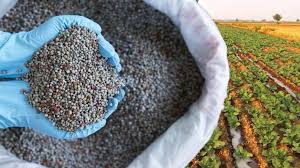
While nothing is set in stone and everything is subject to change, a potential decrease in the price of this input globally is not currently factored into experts’ calculations. Josh Linville, a fertilizer expert at StoneX, told the Canadian publication Western Producer that there are two predominant factors shaping the global phosphorus market going forward, and China is one of them. Shipments from the Asian giant represented approximately half of a normal export program in 2025, and it appears that this country will be even less active in 2026. “Currently, it is not expected to resume phosphate exports until August, in a context where there are only five major suppliers of this fertilizer worldwide.”
The other key element involves single superphosphate (SSP), a lower-concentration product that comes with some problems. Primarily, it contains sulfur, and its prices have skyrocketed. According to Linville, this contributed to the recent closure of an SSP production plant in Brazil, which adds to the restrictions on phosphate supply from China. This scenario does not bode well for monoammonium phosphate (MAP) and diammonium phosphate (DAP), whose current prices are high and show no signs of decreasing. “It’s simply another difficult year,” says the specialist.
For his part, a Rabobank analyst told Brownfield during the Soybean Summit in Illinois, USA, that there was no reason to expect lower phosphate prices in 2026. The specialist questioned Trump’s tariffs and the reduction in exports of this type of fertilizer by China, which is squeezing the global supply. The Asian giant produces around 40% of the world’s processed phosphate. Added to this is the decrease in exports from Russia, Morocco, and Saudi Arabia, which contributes to keeping costs high.
North African countries also include major exporters of phosphate fertilizers. Like China, they have not had the necessary dynamism (Reuters). According to the Argentine firm IF, the international phosphate market remains firm and with an upward bias, driven by supply constraints, higher raw material costs, and demand that, while cautious in some destinations, remains active in Latin America and specific European markets. China’s absence from export trade, logistical disruptions in North Africa, and cost pressures for sulfur and ammonia continue to sustain a tight market.
The approach of the Lunar New Year in the Asian giant and seasonally weaker domestic demand reinforced internal stability, while the lack of Chinese product continued to generate tension in markets dependent on that supply.
Currently, Beijing maintains a dynamic focused on its domestic market. Production is sustained with stable operating rates, but the export window remains closed, severely limiting its role as an international supplier. This absence continues to have a direct impact on the global balance, particularly for South America.
On the other side of the trade, India has practically halted its imports of DAP (distillers per acre), with buyers remaining on the sidelines thanks to high stocks and the recent budget decision confirming a 10% reduction in phosphorus and potassium subsidies for 2026/27. In Europe, prices remained high due to limited supply, with Morocco affected by port closures and delays and Russia experiencing reduced production. In Latin America, the tone was clearly firm, albeit with some nuances.
In phosphate fertilizers, the adjustment historically manifests itself first in terms of availability. The main risk for producers is running short of product (Chacra Magazine). IF emphasizes that the Argentine fertilizer market currently shows a marked decoupling between local prices and the international context, both for urea and phosphate fertilizers. The input-output ratio remains unfavorable and is positioned in the high percentiles of the historical series. This relationship does not incentivize purchases based on price, but neither does it justify a complete wait-and-see strategy.
With average FCA values of USD 865/t for PMA and USD 855/t for PDA, compared to CFR values of USD 765/t and 755/t respectively, the FCA-CFR spread is around USD 100/t. Historically, this gap has fluctuated within a wider range, averaging close to USD 150/t, so current levels confirm that the local market is operating with compressed premiums.
The key difference lies in the adjustment dynamics. While in urea a low spread is usually corrected via price, in phosphates the adjustment has historically manifested itself first through availability. With a less fluid market and a tight global supply, IF considers that the main risk for Argentine producers is running short of product.
In Brazil, there is a similar view regarding phosphates, in that postponing purchases is risky due to future product availability (EMBRAPA). The region is, of course, experiencing the same scenario. A Brazilian analyst says the market has shifted, and the news isn’t encouraging for those who need to buy. “Global phosphate supply is tight. With China out of the export picture (focused on the domestic market and the Lunar New Year festivities) and the United States preparing for spring planting, upward pressure is widespread,” acknowledges Alé Delara.
In Brazil, this is reflected in prices: the domestic market has already felt the impact. PMA rose more than USD 15 last week, trading around USD 712/t, while SSP has already accumulated a 13.3% increase in 2026. Brazilian producers are slowing the pace of purchases, as the terms of trade are unfavorable. The “wait and see” strategy is risky this year. “There is a real risk of a supply bottleneck later on. Those waiting for the ideal price improvement could end up paying a premium for the lack of product,” warns Delara, echoing IF’s opinion.
Source: Infobae Chacra y Campo

EU plans to restrict ammonia imports from Russia in new sanctions package
The European Union plans to introduce quotas on imports of Russian ammonia as part of its forthcoming 20th sanctions package against Moscow, according to a statement from the European Commission.
The proposed measure would limit the volume of ammonia that can enter the bloc from Russia. Ammonia is a key feedstock for nitrogen fertilizers, and the EU has remained partly reliant on Russian supplies since the start of the war in Ukraine.
The Commission said the quotas would be incorporated into the next round of sanctions, which is also set to tighten restrictions on Russia’s energy exports.
In parallel, Brussels intends to impose a full ban on maritime shipments of Russian crude oil. The measures would expand the EU’s blacklist of vessels involved in transporting Russian oil, adding 43 tankers to the sanctions list. This would bring the total number of banned ships to 640.
The new measures are subject to approval by EU member states.
Source Fertilizers Daily

Indorama Corporation completes the acquisition of Anyang Nitrogen Fertilizer in China

Indorama Investment (Suzhou) Co., Ltd., an indirect subsidiary of Indorama Corporation Pte Ltd., Singapore is pleased to announce the successful completion of the acquisition of Anyang Zhongying Fertilizer Co., Ltd., and Anyang Yingde Gases Co., Ltd. (collectively ″Anyang Nitrogen Fertilizer″).
Anyang Fertilizer is a major fertilizer producer located in Henan Province, China. Its primary product is Urea, with by-products of ammonia, automotive urea, and industrial gases.
Indorama Corporation’s acquisition of Anyang Nitrogen Fertilizer is a pivotal strategic move to expand its footprint in China’s vital fertiliser market, enhance its fertiliser product portfolio and supply chain capabilities, and better serve the growing demand for high-quality crop nutrition solutions across China and the Asia-Pacific region. Anyang Nitrogen Fertilizer’s established manufacturing expertise, advanced production facilities and strong regional market presence in Henan and Shandong provinces will complement Indorama’s global fertiliser operations, driving sustainable growth and innovation for the combined entity.
Commenting on the acquisition, Mr. Amit Lohia, Vice Chairman of Indorama Corporation said:
″This acquisition is an important milestone for Indorama, supporting our fertilizer activities in China — the world’s largest fertilizer market and a cornerstone of global agricultural demand. We are extremely excited about expanding our fertilizer business in China, leveraging its exceptional strengths in engineering, process know-how, and innovation. Anyang Fertilizer plays a central role in that vision as a platform for long-term growth and technical excellence.″
Source: AgroPages – Indorama Corpration
Kazphosphate reports record output in 2025
Kazakhstan’s largest producer of phosphate-based products, Kazphosphate, reported record production results for 2025, led by a sharp increase in ammophos output.
Ammophos production rose to 750,000 tons in 2025, up 58% from the previous year. The company produced 474,000 tons in 2024 and 593,000 tons in 2023. The upward trend has continued into 2026, with January output reaching a monthly record of 77,500 tons.
Sulfuric acid and tricalcium phosphate production also expanded steadily over the past three years. Sulfuric acid output increased from 166,000 tons in 2023 to 275,000 tons in 2024 and 346,000 tons in 2025. Tricalcium phosphate production rose from 11,000 tons in 2023 to 17,000 tons in 2024 and 24,000 tons in 2025.
Phosphate rock production is expected to reach 1.4 million tons by the end of 2025, marking a 32-year high, according to the company.
Kazphosphate employs about 3,200 people and operates across the phosphate value chain, including geological exploration, mining and processing of phosphate rock, and the production and sale of phosphate-based mineral fertilizers. The company supplies the domestic agricultural sector and exports to 15 countries, helping reduce Kazakhstan’s reliance on fertilizer imports.
The company attributed the production growth to improvements in operational and management processes, as well as technological upgrades. It is also expanding its product range and plans to begin producing sulfoammophos in the near term to strengthen its position in domestic and international markets.
At the same time, Kazphosphate faces external pressures, including limited availability and sharp price increases for sulfur and sulfuric acid, key inputs for phosphate fertilizer production. The tighter market for these raw materials has increased production costs, prompting additional cost-control measures.
Kazphosphate is advancing several investment projects aimed at expanding capacity and diversifying production. These include the construction of a sulfuric acid plant in Taraz with annual capacity of 800,000 tons and a monoammonium phosphate (MAP 12:52) plant in Zhanatas with planned capacity of 1 million tons per year. The projects are intended to support the creation of a closed production cycle, meet rising demand, and strengthen the company’s competitiveness and export potential.
Source: Fertilizer Daily
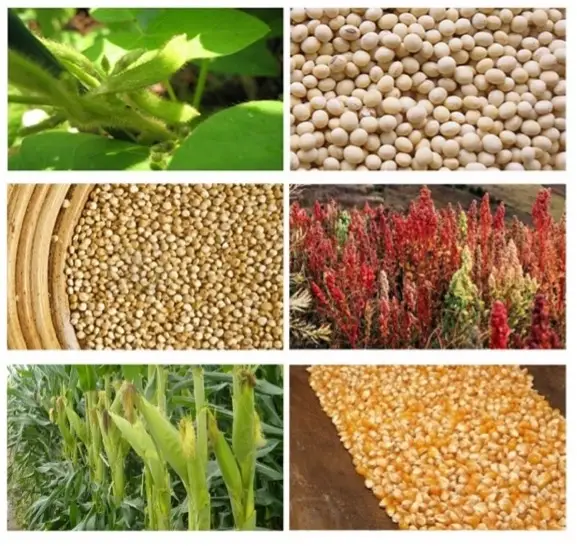
ARGENTINE MAIN CROPS OVERVIEW
SOYBEANS
Soybean planting has concluded nationwide. The Normal/Good crop condition has decreased by 8.6 percentage points, while the Adequate/Optimal soil moisture condition has decreased by 5.6 percentage points. Nationwide, 31% of the crop is in its critical period.
CORN
The early corn harvest has begun with moderate yields. Corn production has been adjusted down by 1 million tons (MTn) from the initial projection, settling at 57 MTn.
SUNFLOWER
The harvest has now covered 27.9% of the suitable area, following a week-on-week increase of 3.7 percentage points, reflecting a year-on-year advance of 20.7 percentage points. Stable and high yields allow for an increase in the production projection to 6.2 MTn.
Source: Buenos Aires Grain Exchange