
The rise in prices reflects geopolitical risks in the Middle East and uncertainties about US trade tariffs.
The escalation of geopolitical tensions between the United States and Iran caused a rise in urea futures prices on the international market last week. This analysis is presented in the weekly fertilizer report from StoneX, a global financial services company.

Between January 12th and 16th, urea futures prices in the United States rose by approximately US$15, considering the contract expiring in February 2026, traded in New Orleans. In Brazil, the increase was more moderate, but futures prices still registered a slight rise, reflecting the greater uncertainty in the global nitrogen fertilizer market.
According to the company’s Market Intelligence analyst, Tomás Pernías, the movement was mainly driven by two factors. “The intensification of tensions between the US and Iran has increased the perceived risk of a new conflict in the Middle East, a strategic region for the production and export of nitrogen fertilizers. This scenario generates concern regarding the continuity of production and the flow of cargo,” he explains.
In addition to geopolitical risk, the market reacted to statements by former US President Donald Trump, who considered imposing a 25% tariff on US imports from countries that maintain trade relations with Iran. “The possibility of such a large tariff increased volatility and put investors on alert, assessing the potential impacts on the global supply of urea,” adds Pernías.
According to 2024 data, Iran was the world’s second-largest exporter of urea, behind only Russia. Together, the two countries accounted for about 30% of global exports of the product, which helps explain the market’s sensitivity to any threat involving Iranian supply.
Among the main destinations for urea produced in Iran are countries such as Turkey, India, and Thailand. In a scenario of reduced Iranian exports, these markets would tend to be the first to be impacted. “However, since Iran plays a significant role in global trade, any restriction on its supply tends to tighten the global balance and put pressure on prices in different regions,” he assesses.
The current scenario could impact prices.
In the case of Brazil, official data from Comex Stat indicate that direct imports of Iranian urea in 2025 totaled just over 180 tons, a volume considered insignificant compared to purchases from other suppliers, such as Nigeria and Oman. Even so, unofficial sources suggest that the actual volume of urea of Iranian origin reaching the country may exceed 1 million tons per year, equivalent to more than 15% of Brazilian imports, through commercial triangulations.
“Even though Brazil is not directly dependent on Iranian urea, any shock to the global supply ends up being reflected in domestic prices, especially in a highly integrated market like that of fertilizers,” analysis concludes.
Source: Cultivar Magazine
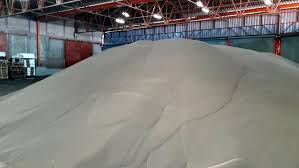
European fertilizer market stalled after European Commission signaled it could be changing CBAM rules

Europe’s fertilizer market has ground to a halt after the European Commission signaled it could retroactively apply an “emergency brake” to the Carbon Border Adjustment Mechanism, injecting fresh uncertainty into pricing and contracts.
Traders told Platts that deals in products such as urea have largely stopped, with buyers unwilling to commit amid confusion over whether CBAM rules could be altered after taking effect on Jan. 1.
The disruption follows the Commission’s proposal of a new Article 27a, which would allow Brussels to suspend or amend CBAM in cases of “serious and unforeseen circumstances.” EU Trade Commissioner Maroš Šefčovič said earlier this month the clause could be used to support agriculture, and officials later confirmed it could apply retroactively.
While CBAM charges will not be payable until 2027, the prospect of retrospective changes has unsettled the market. “Either CBAM applies or it doesn’t,” said Gabriel Rozenberg, chief executive of consultancy CBAMBOO. “There’s no room for ambiguity in a functioning market.”
Fertilizers are particularly exposed because of their high carbon intensity and limited decarbonization options. Industry groups warn the uncertainty risks undermining investment and raising costs for farmers.
Fertilizers Europe said any move to weaken policy clarity would further damage an already strained sector, while producers including Yara have cautioned that mixed signals from Brussels are eroding confidence across the supply chain.
For now, market participants say trading will remain subdued until the Commission clarifies whether CBAM rules will be enforced as written or subject to last-minute political intervention.
Source: FertlizerDaily

Grupa Azoty signs a multi-year fertiliser supply contract for the Scandinavian market
At the end of 2025, Grupa Azoty entered into a multi-year contract for the supply of NPK and NP compound fertilisers to the Scandinavian market with an experienced trading partner – Thoroe Nielsen A/S. The agreement represents an important element in the implementation of Grupa Azoty’s export sales development strategy and the continued strengthening of its presence in Northern Europe.
The Scandinavian market remains one of the key export destinations for nitrogen and compound fertilisers. Systematic growth in demand in this region is translating into increasing sales volumes, while the Group’s product offering meets stringent quality standards and the expectations of end customers.
‘The signed contract strengthens our position in one of the most demanding markets in Europe. Long-term cooperation with an experienced trading partner provides sales stability, enables better volume planning, and confirms the competitiveness of Grupa Azoty’s fertilisers in terms of quality and performance parameters,’ emphasizes Andrzej Dawidowski, the Vice-President of the Grupy Azoty Management Board and the President of the Board of Grupa Azoty Police.
The conclusion of the agreement forms part of coordinated actions across the entire Group, aimed at diversifying sales destinations and developing long-term relationships with trading partners in foreign markets. Across Grupa Azoty as a whole, significant fertiliser sales volumes have been achieved in the current period, confirming the effectiveness of the adopted commercial strategy and the strong position of the Group’s product portfolio.
The contract with Thoroe Nielsen A/S ensures the continuation of stable supplies of NPK and NP fertilisers to the Scandinavian market and constitutes an important element in the further development of the Group’s export activities.
Source: Grupa Azoty S.A . AGNews
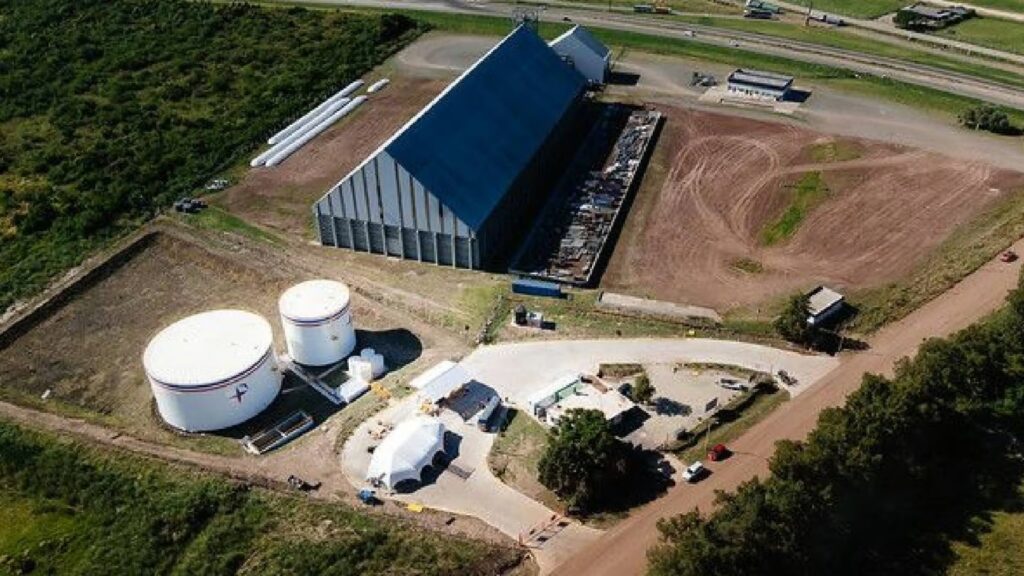
Uruguay: With a new liquid bulk plant, Bunge expands the volume and reach of its fertilizer business
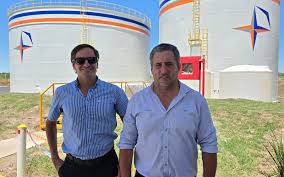
The company PTP inaugurated a liquid bulk plant that will provide services to Bunge for its liquid fertilizer business. Miguel Risso, head of that area for Bunge in Uruguay, noted that the project began five years ago and that its commissioning marks a turning point. “This plant allows us to reach areas that we couldn’t access before, both in terms of volume and logistics,” he explained.
Risso also indicated that the new infrastructure will allow them to operate with larger vessels, improve product availability, and expand territorial coverage from Nueva Palmira to the rest of the country by integrating with regional logistics and enabling larger ships arriving in the region to be diverted to Uruguay.
“Logistics is a determining factor in the development of liquid fertilizers, whose sources are more limited than those of solid fertilizers,” he stated.
In its portfolio, Bunge works with liquid nitrogen and sulfur, and is making progress in incorporating zinc, an increasingly in-demand nutrient, especially for corn.
Risso added that “although liquid fertilizer technology has been around for more than 20 years in Uruguay, the main barrier continued to be logistics.” Once producers have access to the product and resolve the logistics, there’s no going back. “Liquid fertilizer has significant room for growth, even in pastures,” he affirmed.
Source: Verde News
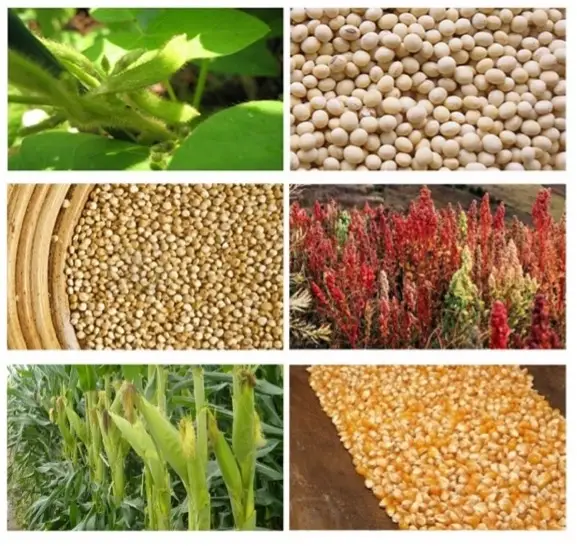
ARGENTINA MAIN CROPS OVERVIEW
SOYBEANS: Planting covers 96.2% of the projected area. Rainfall in the north is limiting progress. 14% of the early-planted soybeans have entered the critical period, awaiting further rainfall.
CORN: Corn planting has reached 93.1% of the projected area, although with a year-on-year delay of 5.3 percentage points. Planting continues behind schedule in the Northwest and Northeast regions, and monitoring of the Dalbulus maidis (cowpea weevil) is being intensified in various areas of the agricultural region.
SUNFLOWER: After a week-on-week increase of 5.6 percentage points, 21.9% has been harvested, reflecting a 12 percentage point advance compared to the U5C average. With an average yield of 22.6 quintals per hectare, the projection remains at 5.8 million tons.
Source: Buenos Aires Grain Exchange